

Before you start
Set up your project and get an API key.
Android Demo App
See a full working example with a repository to clone.
1
Install the SDK
Add the Crossmint dependencies to your app’s
build.gradle.kts file:- Version Catalog
- Direct
build.gradle.kts
libs.versions.toml
Requirements
- Minimum Android SDK: API 24 (Android 7.0+)
- JDK 11 or newer
- Jetpack Compose
2
Configure your API key
The Crossmint SDK requires a client API key for authentication.
Get your client API key using the Crossmint Console.
Get your client API key using the Crossmint Console.
3
Initialize the Crossmint SDK
Initialize the SDK in your Then wrap your top-level composable with
Application class, then wrap your composable tree with CrossmintNonCustodialSignerProvider to enable the non-custodial signing layer. This example uses Crossmint Auth but you can use any authentication provider of your choice.MyApplication.kt
CrossmintNonCustodialSignerProvider:The environment (staging vs production) is automatically determined by your API key. Staging keys start with
ck_staging_, production keys with ck_production_.Access SDK instances
Inside theCrossmintNonCustodialSignerProvider, access SDK functionality using LocalCrossmintSDK.current:4
Authenticate users
Actions within the SDK are user-based, so first you need to authenticate a user.
Choose your authentication method:
- Crossmint Auth (OTP)
- Third-Party Auth (Prod)
Use Crossmint’s built-in OTP authentication for easy, email-based login.
1
Send OTP to user's email
2
Enter the OTP sent to the user's email
See the Android Demo App repository for a complete UI implementation example with ViewModels and Compose screens.
5
Create a wallet
After authentication, create the user’s wallet. This example uses Base Sepolia (Base testnet) but you can choose any supported chain.
Use
getWallet(EVMChain.BaseSepolia) for returning users to fetch their existing wallet without creating a new one.6
Check wallet balance
Before sending tokens, check the wallet balance:
7
Fund the wallet
Before sending USDC, you need to get some into the wallet.Option 1: Use the staging fund method (staging only)Option 2: Use the USDC FaucetGet the wallet address and use the USDC Faucet:Navigate to the faucet, select Base Sepolia, and enter the wallet address.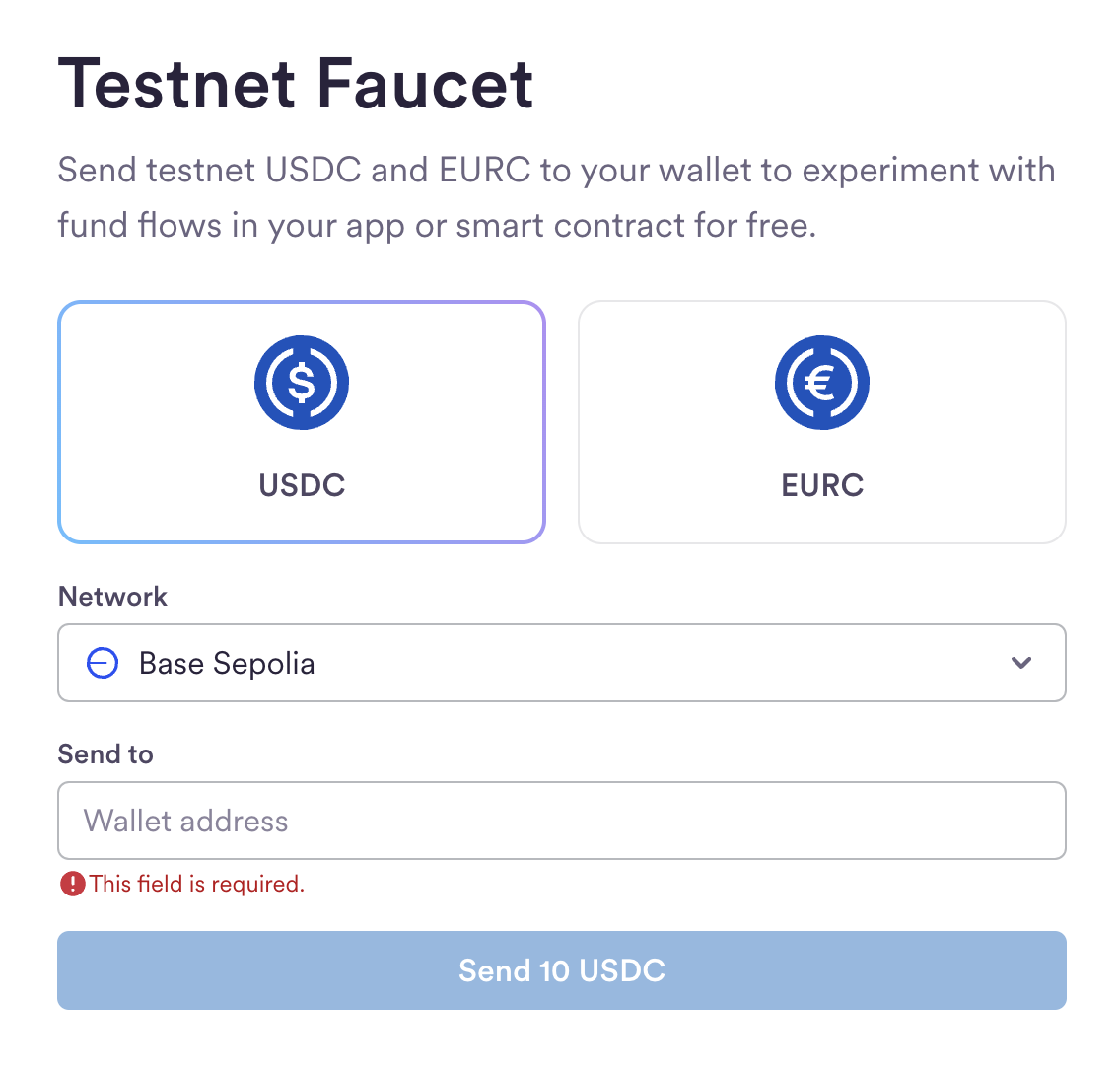
8
Send USDC
Send USDC to another wallet using the The very first time that a wallet sends a transaction on this device, an OTP will be required, sent to the user via email.Following transactions sent from the same device will not need OTP verification.To handle the OTP flow, collect the Here is a simple OTP dialog component you can use:
And that is it! You just created a non-custodial wallet for your user and made a USDC transaction on Base Sepolia.
wallet.send function:isOTPRequired flow from the SDK in your composable:OTP Sample code
OTP Sample code
Launching in Production
For production, the steps are almost identical, but some changes are required:- Create a developer account on the production console
- Create a production client API key on the API Keys page with the API scopes
users.create,users.read,wallets.read,wallets.create,wallets:transactions.create,wallets:transactions.sign,wallets:balance.read,wallets.fund - Update your
local.propertieswith the production API key - Use your own authentication provider: For production applications, Crossmint recommends using third-party authentication (Option 2 from Step 4) with providers like Auth0, Firebase, or Supabase, rather than Crossmint Auth (OTP). Configure JWT authentication in the Crossmint Console under API Keys → JWT Authentication.
- Switch your chains from testnets to their mainnet equivalents (for example,
base-sepoliatobase), and re-create your wallets. Staging wallet addresses do not carry over to production. - Replace test tokens with real assets (for example,
usdxmtousdc), and plan for gas sponsorship as a real cost